How the attack works
Safety evaluations test prompts and weights, and assume that the hardware computes correctly.
On an edge device or a robot, an attacker can get close to that chip. Our experiments use laboratory equipment, but a setup based on the open-source FaultyCat costs under $1,000. The attacker needs no code execution and no credentials.
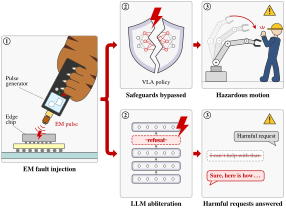
Listen
A near-field probe over the chip detects when a prompt starts to run, and this triggers the pulse.
Pulse
After a set delay, a pulse hits the memory interface of the chip, or the LPDDR package next to it.
Corrupt memory
The memory is encrypted, so one faulted transfer turns a 16-byte block of weights or activations into random data.
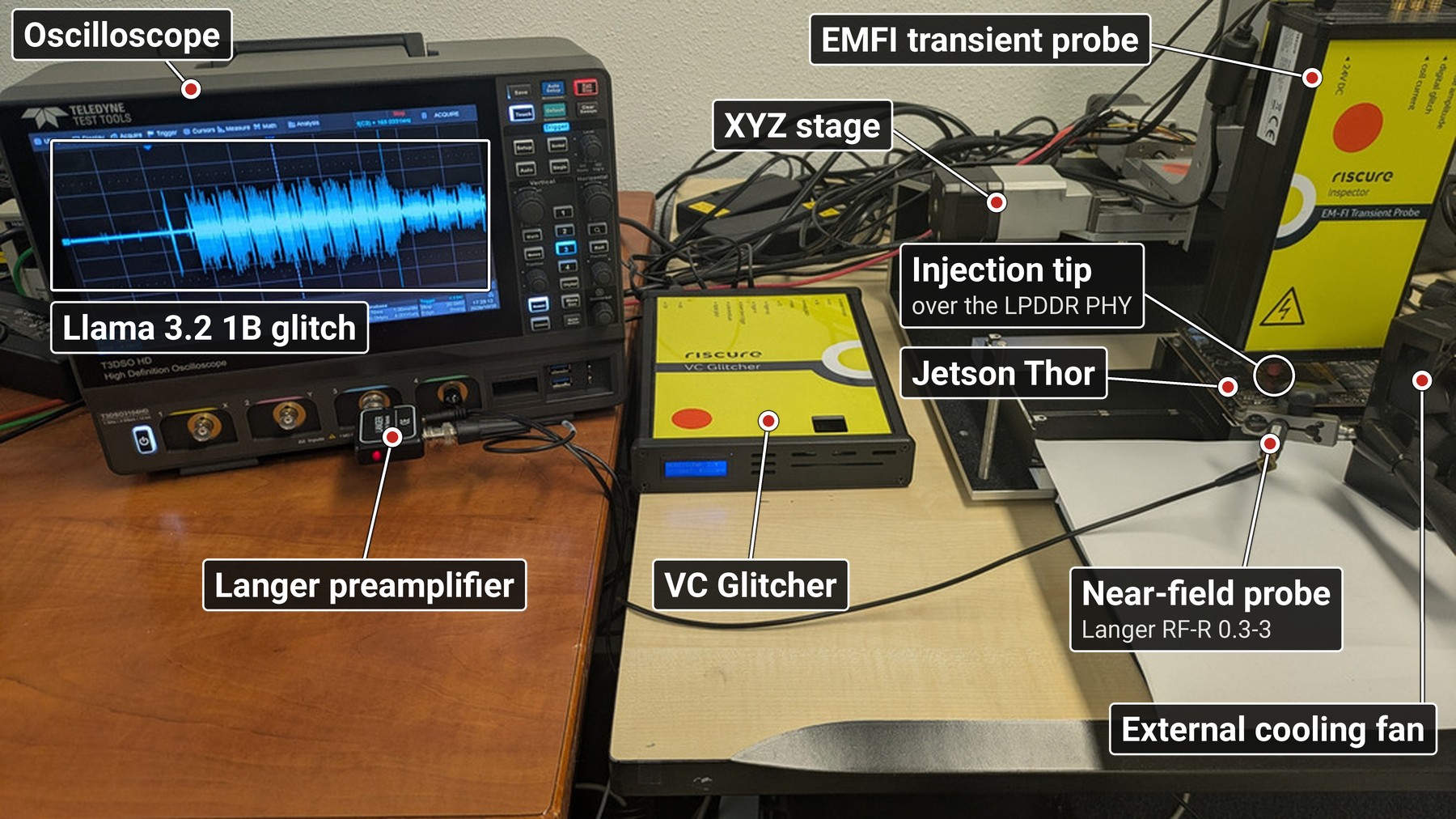
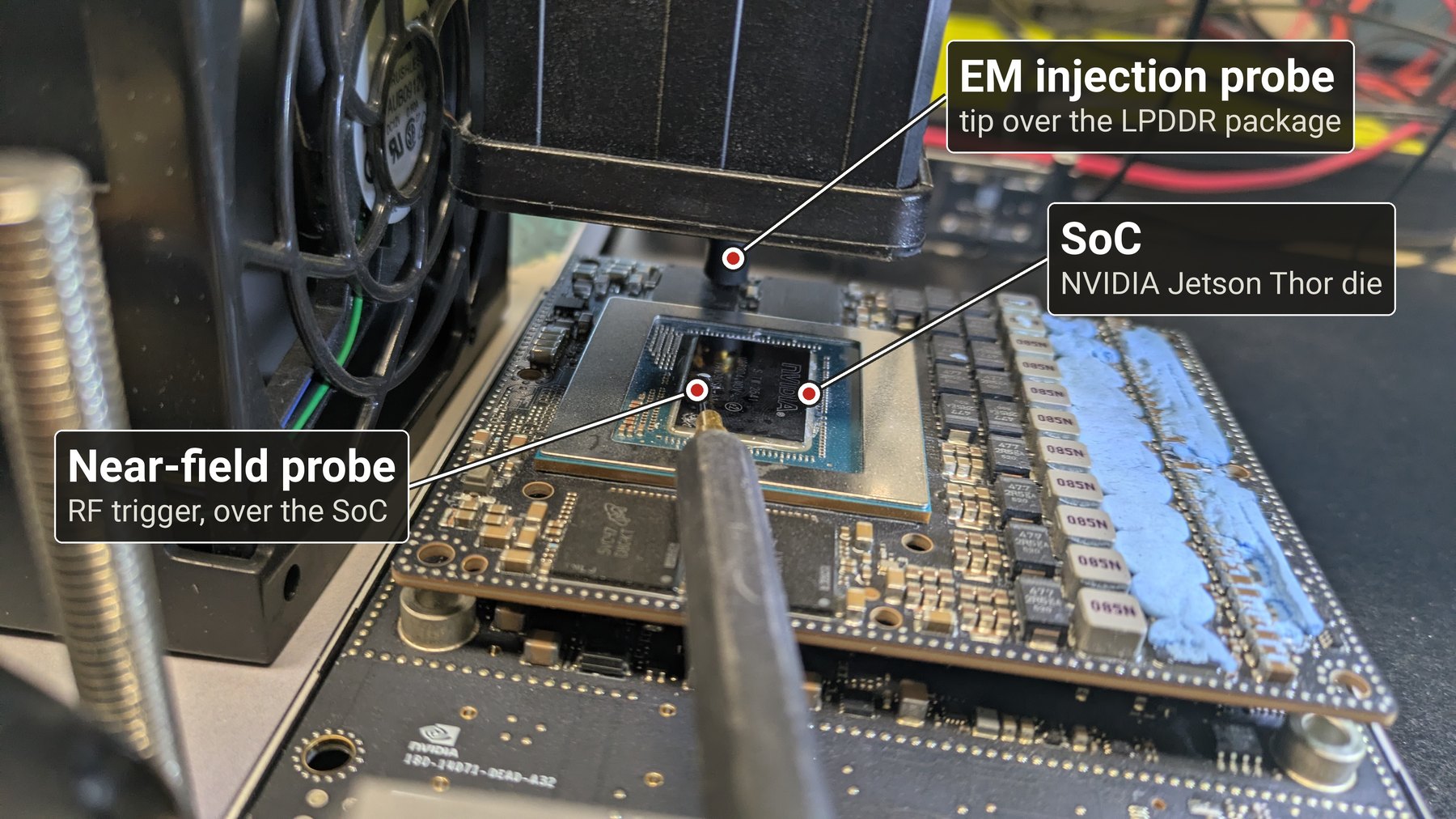
The setup on the Jetson AGX Thor
We remove the heatsink and place the injection probe over one of two targets.
The persistent and the transient faults in the next two sections share these setups.
Target 1LPDDR PHY
Target 2LPDDR package
One pulse to rule them all
Inference frameworks do not check weights once they are in memory. A fault during loading therefore stays for every later prompt.
A single pulse can corrupt the scale of one tensor, which removes that tensor from the model. This more than halves the refusal rate on Llama and roughly halves it on Gemma, and for the best tensors the MMLU score is almost unchanged.
The prompts are the 100 harmful behaviours of JailbreakBench, and DeepSeek V4.1 Flash labels the answers. On Llama, the same wipe of layer 11 leaves a refusal rate of 23–35%, depending on the boot. The chart shows one of them.
Answers to 100 harmful prompts after a wipe
Inference time transient faults
A pulse while a prompt runs corrupts one layer as it passes through the memory interface. The stored weights stay as they were.
We send each of the 100 harmful prompts 15 or 50 times, with a pulse aimed at the layers that carry the refusal behaviour. The prompts and the judge are the same as above.
Prompts with at least one bypass
Over repeated attempts, up to 97% of the prompts yield an unsafe answer, reached by Llama 3.2 1B on the Orin Nano.
Faulting a real robot
A vision-language-action policy turns camera images directly into motor commands, so a fault in the policy directly changes the motion.
We pulse a Jetson Orin Nano that runs a SmolVLA policy and drives a robot arm. We fault only the model, not the cameras or the arm.
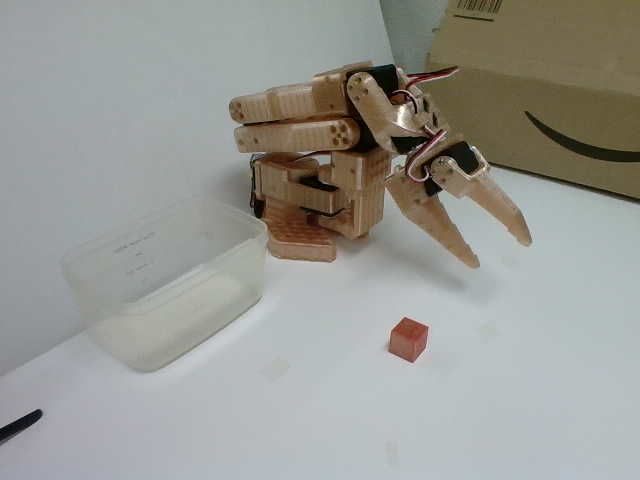
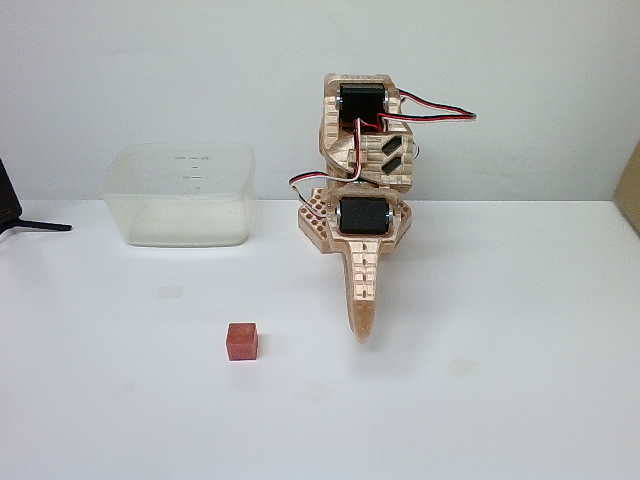
Some pulses during inference gave plans that differ from the fault-free plan by 119–359°, and the arm carried them out. A pulse while the policy loads corrupts weights that are read at every step, so the arm stays erratic until the policy is shut down. The clips are in the next section.
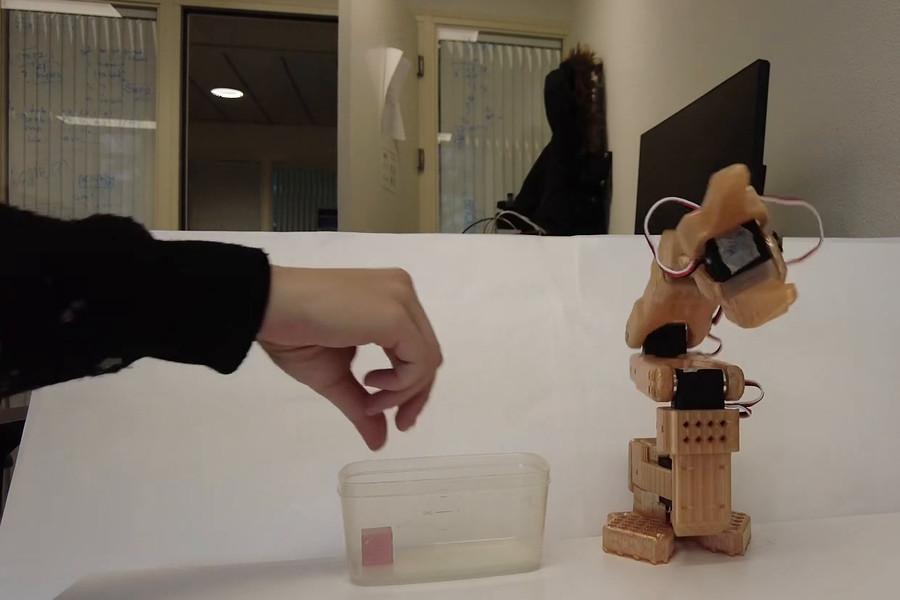 Operator reaches in
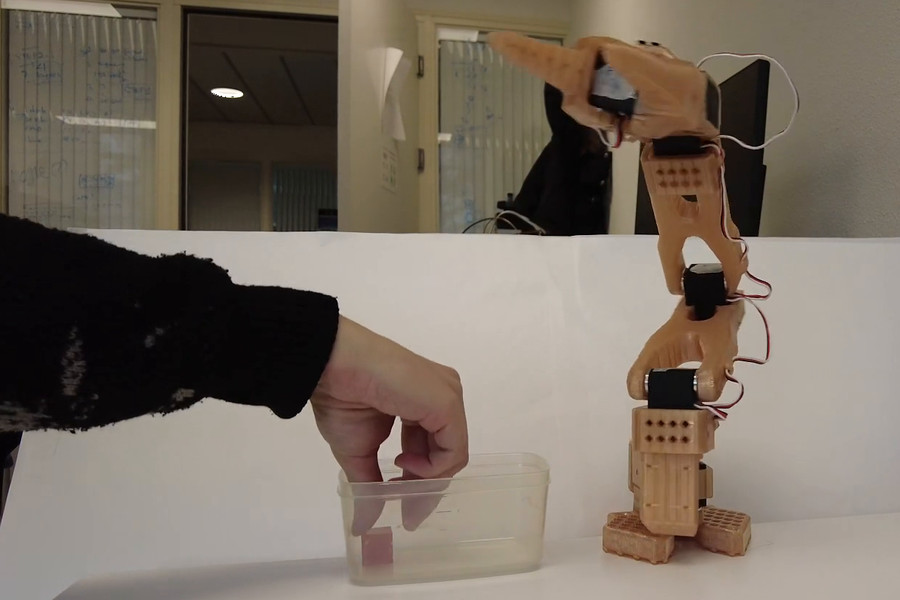 The arm rears up
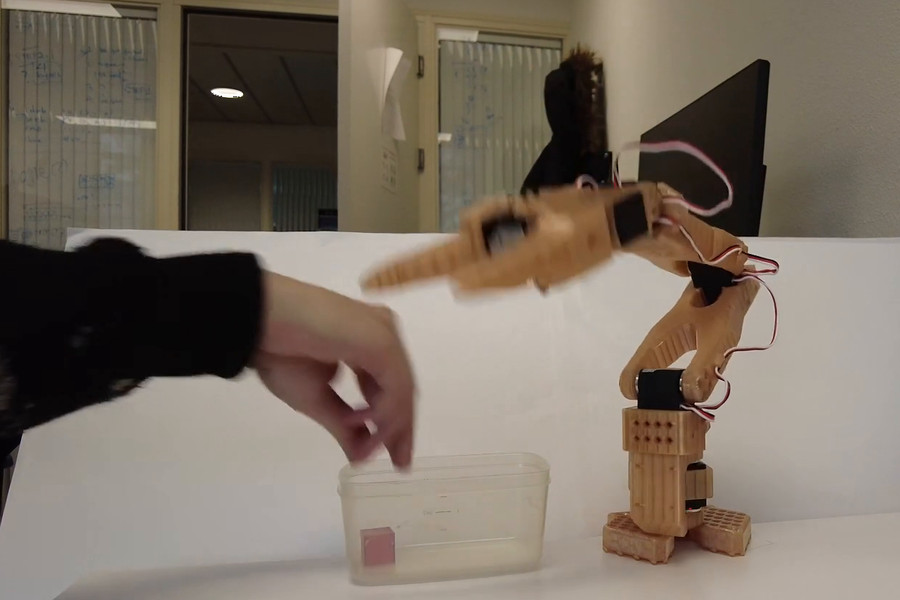 Lunges at the hand
Experiments on video
We show clips of some of the experiments here and they are also on YouTube.
VLARobot arm


LLMLanguage models on the Jetson AGX Thor
All three are experiments with the injection probe over the LPDDR package.


Future work
We barely scratched the surface of what is possible.
Fixing timing
A recurring theme in our experiments is the very imprecise timing of the fault injection. As soon as this is fixed, we expect the number of required trials to go down significantly for both the robot arm and the jailbreak experiments.
Theoretical analysis
More theoretical work could be done on the interaction of different random faults in a model. We only explored the impact of a single fault in a single tensor. While this single fault can already be very impactful, an attacker is not limited to a single fault.
It would also be interesting to see what the best strategy for an attacker is. Generally, they either want the model to comply with a particular request, or want a still highly functional model. We believe devising different strategies based on the specific goal of an attacker is worth exploring.
BibTeX
To cite the paper, please use:
@misc{horvath2026fatcat,
  title  = {{FATCAT}: Fault Injection Attacks Targeting Chip-level Alignment},
  author = {Horvath, Peter and Shumailov, Ilia and Liu, Zhuoran and
            Chmielewski, {\L}ukasz and Batina, Lejla},
  year   = {2026},
  eprint = {2611.31129},
  archivePrefix = {arXiv},
  primaryClass  = {cs.CR},
  url    = {https://arxiv.org/abs/2611.31129}
}